
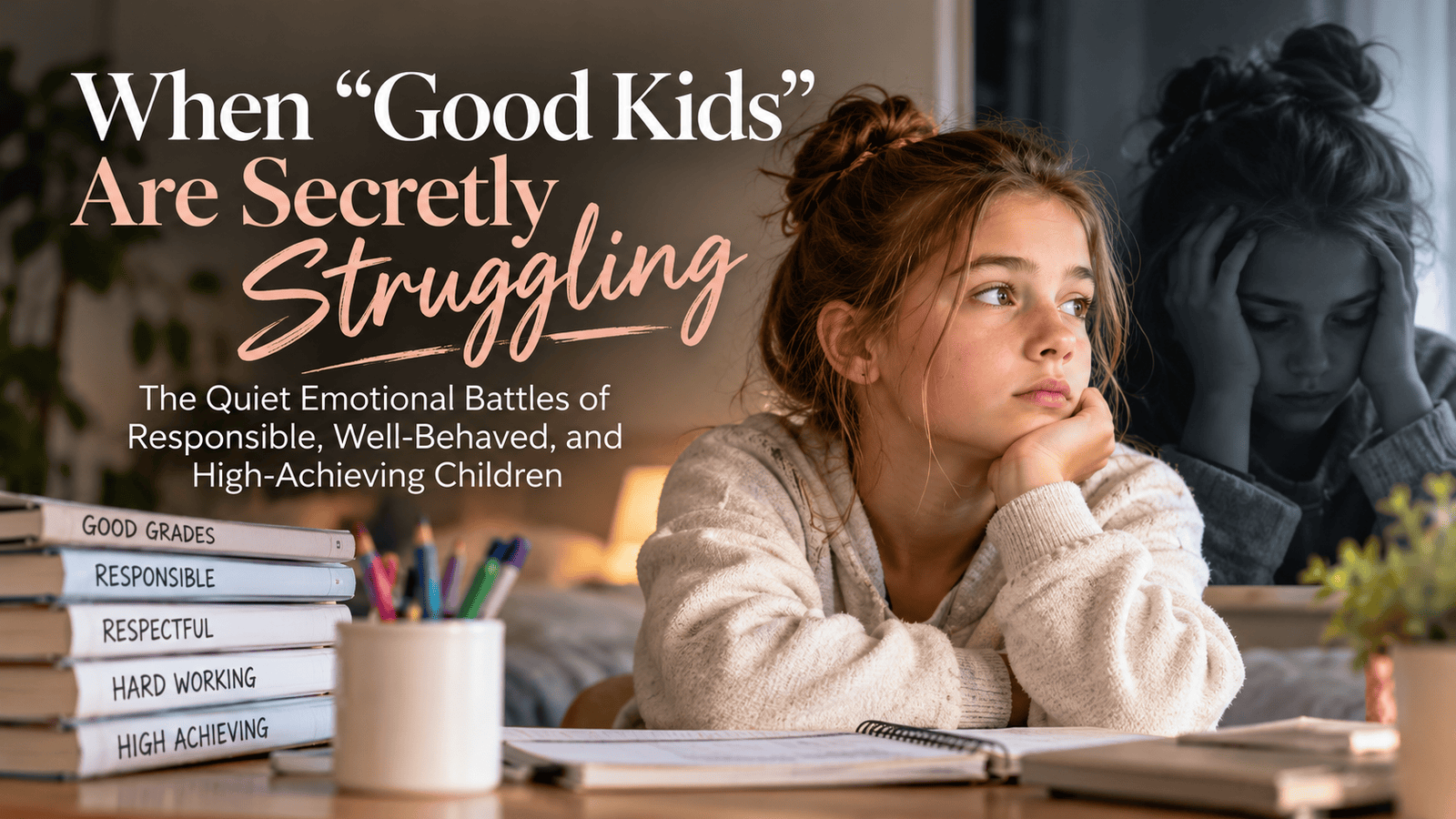

The quiet emotional battles of responsible, well-behaved, and high-achieving children who seem to have everything under control.
The Child Everyone Thinks Is Doing Just Fine
They turn in their homework on time. They follow the rules, rarely cause trouble, and are often described as
mature beyond their years. Teachers appreciate them. Parents are proud of them. Other adults describe
them as responsible, respectful, and easy to raise.
From the outside, these children appear to be doing everything right
But what happens when the child who never causes problems is quietly falling apart?
What happens when the teenager earning excellent grades is overwhelmed by the fear of disappointing
everyone? Or when the child who always smiles has learned to hide their sadness because they do not
want to burden anyone?
Sometimes, the children who appear to need the least attention are the very ones who need someone to
look a little closer.
As parents, caregivers, and educators, we often recognize emotional struggles through noticeable changes
in behavior. We pay attention when children become defiant, withdrawn, disruptive, or visibly upset. These
behaviors tend to signal that something is wrong.
Yet emotional distress does not always announce itself through difficult behavior
Sometimes, it hides behind good manners, academic achievement, perfectionism, and a child who
repeatedly insists, “I’m fine.”
And because these children continue meeting expectations, their emotional needs can go unnoticed for far
longer than anyone realizes.
When Being Good Becomes an Unspoken Responsibility
Most children want to make the important adults in their lives proud. They seek approval, connection,
reassurance, and a sense of belonging.
For some children, however, the desire to do well gradually becomes something more complicated
They begin to believe their value is connected to their behavior, achievements, or ability to keep others
happy.
They may develop quiet expectations of themselves:
I don’t want to disappoint anyone
Other people have bigger problems than I do.
If I need help, people might think I’m weak
I have to be the responsible one.
These beliefs do not necessarily develop because someone explicitly teaches them. Sometimes, they
emerge through subtle experiences, family dynamics, academic pressure, temperament, or the child’s
interpretation of what earns praise and acceptance.
A child who frequently hears how mature, dependable, or easygoing they are may begin to feel responsible
for maintaining that identity.
Over time, being “the good kid” can become less about making healthy choices and more about avoiding
mistakes, conflict, or disappointment.
What began as a positive characteristic can quietly evolve into emotional pressure.
The problem is not that children are responsible, respectful, or successful. The problem begins when they
believe they must remain those things at the expense of their emotional well-being.
The Anxiety Hidden Behind Achievement
High-achieving children often receive recognition for their motivation, discipline, and academic success.
These qualities deserve encouragement.
However, achievement and emotional wellness are not always the same thing.
A child can earn excellent grades while experiencing significant anxiety
A teenager can participate in extracurricular activities, maintain friendships, and meet every expectation
while feeling emotionally exhausted.
Some children are motivated by curiosity and enjoyment. Others may be driven primarily by fear
They fear failing a test, disappointing a teacher, upsetting a parent, or losing the identity they have built
around being successful.
For these children, a grade of 95% may not represent success. Instead, their attention goes directly to the
five points they missed.
A small mistake becomes evidence that they are not good enough.
A moment of correction feels like rejection.
An ordinary setback can trigger disproportionate shame or worry.
Parents may interpret this behavior as ambition or strong work ethic without recognizing the anxiety
underneath.
The important distinction is not simply how well a child performs, but how much emotional distress they
experience while trying to perform.
Healthy achievement allows room for curiosity, mistakes, rest, and growth.
Anxiety-driven achievement can leave children believing they are only as valuable as their most recent
success.
The Children Who Have Learned Not to Need Anything
Some children become exceptionally skilled at minimizing their own emotional needs.
They rarely complain. They avoid asking for help. They quickly reassure adults that everything is okay,
even when it is not.
These children may notice when parents are stressed, when siblings require additional attention, or when
the family is experiencing difficulties.
Without being asked, they may decide that being easygoing is their way of helping.
They do not want to add another problem.
They do not want to create conflict.
They do not want someone they love to worry about them.
In some families, children take on emotional responsibilities that exceed what is developmentally
appropriate. They may become the peacemaker, the helper, or the person who tries to keep everyone
happy.
While their behavior may appear mature, it can come with a significant emotional cost.
Children need opportunities to be children.
They need permission to feel disappointed, become frustrated, ask for reassurance, express sadness, and
make mistakes without believing they are creating a burden.
A child should not have to earn emotional support by reaching a breaking point
And they should not have to be struggling visibly before someone asks how they are really doing.
When Depression Does Not Look Like Sadness
One of the more easily overlooked realities of childhood and adolescent mental health is that depression
does not always resemble the sadness adults expect to see.
Some children experiencing depression continue attending school, maintaining friendships, completing
assignments, and participating in activities.
They may laugh with friends during the day and feel emotionally disconnected when they return home.
Others become increasingly irritable, self-critical, fatigued, or withdrawn.
The changes may be subtle:
●They lose interest in things they previously enjoyed.
●They become unusually sensitive to criticism or disappointment.
●They appear exhausted despite getting adequate sleep.
●They experience headaches, stomachaches, or other physical complaints.
●They spend more time alone or seem emotionally distant.
●They express guilt, worthlessness, or persistent self-doubt.
●They continue meeting expectations but seem to have lost their sense of enjoyment.
These experiences do not automatically indicate depression. Children can experience similar changes for
many reasons, including stress, illness, sleep difficulties, and developmental transitions.
However, persistent changes deserve attention, even when a child continues functioning well in other
areas.
A child does not have to be failing in school, acting out, or visibly crying to be experiencing meaningful
emotional distress.
Sometimes, what looks like resilience from the outside is a child using every ounce of energy simply to get
through the day.
The Emotional Cost of Always Being the Strong One
There is a particular kind of loneliness that can develop when everyone assumes you are okay
When a child becomes known as independent, responsible, or emotionally mature, adults may
unintentionally check on them less frequently
The child who is struggling academically receives tutoring.
The child who acts out receives behavioral attention
The child who frequently becomes upset receives reassurance.
Meanwhile, the child who quietly meets expectations may receive praise but very little emotional
exploration.
“You’re always so responsible.”
“I never have to worry about you.”
“You’re my easy child.”
These statements are often spoken with genuine affection and pride.
But children may hear something different.
They may interpret those messages as expectations they cannot afford to violate.
If I’m the child nobody worries about, what happens when I need someone?
Over time, these children may become uncomfortable expressing vulnerability. They may apologize for
crying, dismiss their own feelings, or struggle to identify what they need.
Some become so accustomed to caring for other people’s comfort that they lose touch with their own
emotional experiences.
This is why emotional connection requires more than recognizing a child’s accomplishments.
Children also need to know they are loved, accepted, and supported when they are not achieving, helping,
smiling, or holding everything together
Looking Beyond Behavior: What Parents May Be Missing
One of the most meaningful shifts parents can make is moving beyond the question, “Is my child behaving
appropriately?” and beginning to ask, “How is my child experiencing their world?”
Behavior tells us something about a child, but it does not tell us everything.
Good grades do not necessarily mean a child feels confident.
Cooperation does not always mean a child feels safe expressing disagreement.
Independence does not mean a child never needs reassurance.
And a cheerful personality does not mean a child never experiences anxiety, sadness, or loneliness.
Parents can become more attuned to their children’s emotional experiences by noticing patterns rather
than waiting for obvious problems.
Consider whether your child has become increasingly concerned about making mistakes, seeks frequent
reassurance, apologizes excessively, struggles to relax, or becomes distressed when expectations change.
Notice how they respond to disappointment.
Are they able to recover from an imperfect grade, or does one mistake seem to change how they feel about
themselves?
Do they enjoy their accomplishments, or do they immediately begin worrying about the next expectation?
Do they feel comfortable telling you when they are upset, even when their feelings might be difficult for you
to hear?
These questions can reveal important information that grades, report cards, and outward behavior cannot.
Creating a Home Where Children Do Not Have to Pretend
The goal is not to discourage responsibility, independence, or achievement.
It is to create an environment where these qualities can develop alongside emotional safety
Children benefit from knowing that their relationships are not dependent on their performance.
Here are several ways parents can help create that sense of security.
1. Praise Who They Are, Not Only What They Accomplish
Recognize kindness, curiosity, creativity, honesty, and effort without making every conversation about
productivity or success.
Instead of focusing exclusively on grades or accomplishments, try saying:
“I really enjoy spending time with you.”
“I love hearing what you think about things.”
“You don’t have to accomplish anything for me to be proud of who you are.”
These messages reinforce that a child’s worth exists independently of achievement.
2. Make Room for Difficult Emotions
Children need to know that sadness, anger, disappointment, frustration, and fear are acceptable human
experiences.
Rather than immediately trying to fix uncomfortable emotions, offer understanding.
“I can see that this really matters to you.”
“You don’t have to pretend you’re okay.”
“It’s okay to feel disappointed. I’m here with you.”
Emotional safety develops when children learn that expressing their feelings does not threaten their
connection with the people they love.
3. Pay Attention to the Child Who Rarely Asks for Help
Some children will naturally seek reassurance. Others may need adults to create opportunities for
connection.
Spend individual time together without making the conversation feel like an interrogation.
A quiet car ride, an evening walk, cooking together, or simply sitting nearby may provide opportunities for a
child to open up.
Instead of asking only, “How was school?” consider asking:
“What’s something that has felt stressful lately?”
“Do you ever feel like people expect too much from you?”
“Is there anything you’ve been keeping to yourself because you don’t want anyone to worry?”
The goal is not to force disclosure. It is to communicate consistent availability.
4. Normalize Mistakes and Imperfection
Children who struggle with perfectionism often need repeated reassurance that mistakes are part of
learning.
Model this through your own behavior.
Let them hear you acknowledge mistakes without harsh self-criticism.
Show them that plans can change, goals can be adjusted, and disappointment can be managed.
Most importantly, avoid communicating that perfection is the standard for acceptance.
5. Make Rest and Enjoyment Part of a Healthy Life
Some children become so focused on achievement that they lose the ability to relax without feeling guilty.
Encourage activities without performance expectations
Allow time for creativity, friendships, play, hobbies, and simply doing nothing.
Children need opportunities to experience life beyond academic and behavioral expectations.
Rest is not something children should have to earn by exhausting themselves first.
6. Respond With Curiosity Rather Than Assumptions
When a child says, “I’m fine,” we sometimes accept the answer because everything else seems to be going
well.
Instead, consider responding:
“I’m glad to hear that. And I want you to know that even when things aren’t fine, you can always talk to me.”
This simple message removes the pressure to provide the answer adults may expect.
It leaves the door open without demanding that the child walk through it immediately.
When Additional Support May Be Helpful
Not every responsible or high-achieving child is experiencing emotional difficulties. Many children genuinely
enjoy structure, independence, and accomplishment.
The concern arises when these qualities are accompanied by persistent emotional distress, excessive
self-criticism, fear of failure, withdrawal, or difficulty managing everyday expectations
If your child seems unusually overwhelmed, has persistent mood changes, experiences significant anxiety,
or struggles to enjoy activities they once loved, consider seeking guidance from a qualified mental health
professional.
Early support can help children develop emotional awareness, coping skills, self-compassion, and the
ability to communicate their needs.
Parents do not need to wait for a crisis before seeking support.
If a child expresses thoughts of suicide or self-harm, take those statements seriously and arrange an
immediate safety assessment. In the United States, 988 offers crisis support, and emergency services
should be contacted when there is immediate danger.
What Every “Good Kid” Deserves to Hear
Somewhere, there is a child who believes they must always be strong.
A teenager who lies awake worrying about disappointing their parents
A student who receives an excellent grade but feels nothing except relief that they did not fail.
A child who desperately wants someone to notice they are struggling but does not know how to ask for
help.
These children may not demand attention.
They may not create problems.
They may not give adults an obvious reason to worry.
But they still need understanding, reassurance, and emotional connection
They need someone to recognize that being responsible does not mean they are never overwhelmed.
That independence does not eliminate the need for support.
That achievement does not guarantee happiness.
And that being a good child should never require hiding difficult emotions.
Perhaps one of the greatest gifts we can give children is the freedom to be fully human.
To be capable and still need help.
To be kind and still feel angry.
To be successful and still make mistakes.
To be strong and still have moments when they fall apart.
Because the healthiest children are not necessarily the ones who never struggle. They are the ones who
know they do not have to struggle alone.
And sometimes, the most important thing we can say to a child who seems to have everything under
control is simply:
“I see how hard you try. But I want you to know that you don’t always have to be okay. You don’t have to
carry everything by yourself. And you never have to earn my love by being perfect.”
Whisper of Wisdom
“Sometimes the children who ask for the least support are the ones quietly carrying the most.
Look beyond their achievements, listen beyond their words, and remind them that they are
loved for who they are, not for how well they hold everything together.”
— Christine Colburn
About the Author
Christine Colburn, LPC, NCC, CCTP, CATP, is a Licensed Professional Counselor, author, and founder of
Beacon of Hope Counseling Services, LLC, in Gilbert, Arizona. With a special focus on children,
adolescents, trauma, and emotional wellness, Christine is passionate about helping individuals and families
better understand the emotional experiences that shape their lives.
Through her counseling practice, books, educational resources, and writing, Christine strives to make
mental health conversations more approachable, meaningful, and compassionate. She believes children deserve to feel heard, understood, and emotionally safe, and that helping families build stronger
connections begins with recognizing the needs that are not always visible.
